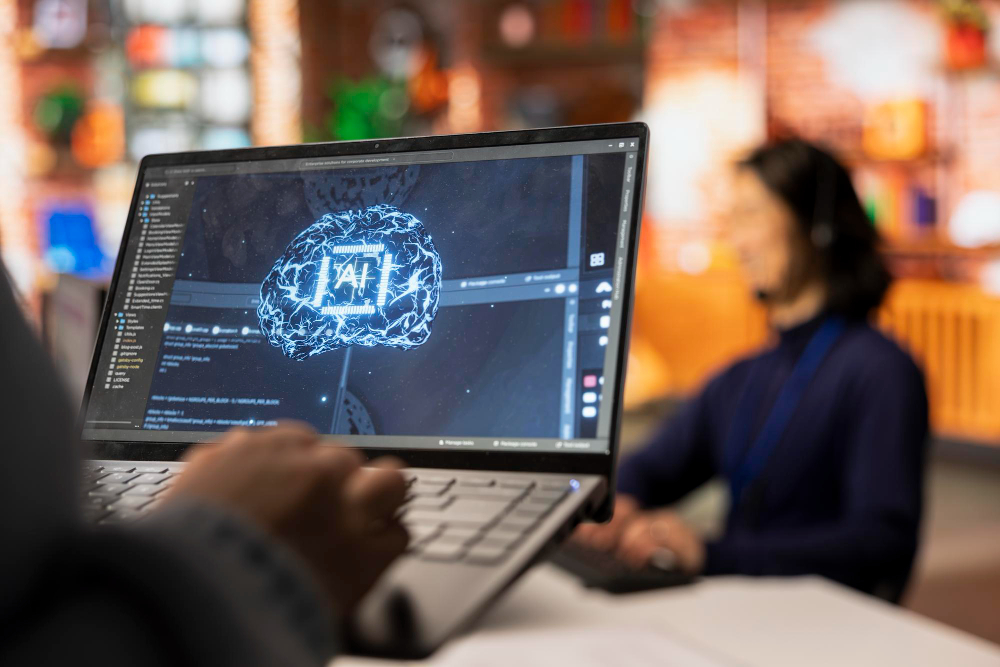

The product development landscape is evolving faster than ever, and 2025 marks a major turning point. With digital experiences becoming the foundation of every business, companies now rely on AI-driven technologies to design, validate, and improve their products. At the forefront of this transformation is the AI Product Designer—a powerful blend of creativity, automation, and data intelligence. Platforms like Quikest are enabling companies to build better products, faster and more efficiently than traditional workflows ever allowed.
In this blog, we explore how an Artificial Intelligence Product Designer is transforming modern product development, why businesses trust AI for UI/UX, and how Quikest is setting new standards for intelligent design.
1. What Is an AI Product Designer?
An AI Product Designer is a smart system that uses artificial intelligence to plan, conceptualize, design, test, and optimize digital products. It combines the skillset of a traditional product designer with advanced capabilities such as:
- Rapid data-driven decision-making
- Automated UI/UX generation
- User behavior prediction
- Fast prototyping
- Intelligent A/B testing
Unlike traditional workflows, which rely heavily on manual inputs, an AI UX Designer analyzes vast amounts of user data to create highly personalized and intuitive user experiences. This ensures products are more aligned with user expectations from the start.
2. Why AI Is Changing Product Development in 2025
The year 2025 represents a major shift in how companies build products. Businesses demand speed, accuracy, and cost-effective innovation. Artificial intelligence bridges these gaps and supports the entire development lifecycle, from ideation to launch.
Key reasons for the shift:
a. Faster Design Cycles
An AI UI/UX Product Designer can create wireframes, mockups, and UI components instantly. What previously took days or weeks now takes minutes, dramatically reducing the time-to-market.
b. More Accurate User Insights
AI analyzes real user behavior, engagement patterns, and preferences. It predicts how users will interact with a product, helping businesses avoid costly design mistakes.
c. Higher Design Quality
AI doesn’t get tired, biased, or inconsistent. It maintains brand guidelines across all screens and ensures visual accuracy, accessibility, and performance optimization.
d. Reduced Development Costs
By automating repetitive design tasks, companies save both time and resources. This is especially valuable for startups, SMBs, and agencies.
3. The Unique Role of an AI UX Designer
The AI UX Designer goes beyond visual design; it understands user psychology, behavior, journey mapping, and accessibility standards. In 2025, user expectations are higher than ever, making UX central to product success.
AI-powered UX systems can:
- Identify friction points in user flows
- Suggest UX improvements in real time
- Test multiple layouts simultaneously
- Personalize the experience for each user segment
Quikest leverages these capabilities to help businesses deliver user-centric products that outperform competitors.
4. How Quikest Is Leading the Future of AI-Driven Product Design
As companies search for ways to accelerate product development, Quikest offers a comprehensive AI-powered platform that integrates design intelligence, automation, and product strategy. Quikest is not just a tool—it acts as a complete AI Product Design Expert for businesses.
Here’s how Quikest stands out:
a. Automated UI/UX Generation
Quikest instantly generates clean, high-converting UI layouts that follow best design practices. Its intelligent engine understands brand tone, color psychology, accessibility rules, and modern UI trends.
b. AI-Backed Product Strategy
Beyond visuals, Quikest evaluates user needs, competitor data, and market trends to recommend product features, enhancements, and design improvements.
c. Real-Time Collaboration
Teams can collaborate with an AI Design Specialist to refine user journeys, create better prototypes, and enhance design workflows without slowing development.
d. Data-Driven Design Improvements
Quikest’s AI continuously learns from user interaction data, recommending updates that boost engagement, conversion, and retention.
e. End-to-End Design Support
From ideation to deployment, Quikest acts as a virtual AI Product Design Expert, helping teams make smarter decisions at every stage of product creation.
5. Benefits of Using an AI UI/UX Product Designer in 2025
Businesses across industries—from SaaS and e-commerce to healthcare and fintech—are adopting AI-powered design tools for several compelling reasons:
✓ Improved User Satisfaction
AI ensures clean navigation, intuitive flow, and personalized experiences.
✓ Faster Prototyping & Testing
Teams can test multiple versions of a design simultaneously, reducing guesswork.
✓ Lower Operational Costs
Automation reduces human workload and minimizes repetitive design tasks.
✓ Better Accessibility Compliance
AI audits design decisions to ensure they meet global accessibility standards.
✓ Future-Ready Innovation
AI integrates cutting-edge UI/UX trends into every project, keeping products modern and competitive.
6. The Future of Product Design With AI
Looking ahead, AI will continue transforming design teams into hyper-efficient, insight-driven powerhouses. By 2030, AI-driven product design may become the global standard, with companies relying on automated systems for:
- Personalized user interfaces
- Predictive user journeys
- Smart design recommendations
- Automated feature planning
Businesses that adopt platforms like Quikest early will gain a significant competitive edge.